
If you're new to dressing better, learning how color coordination simplifies mens outfits for beginners is the first step that makes everything else fall into place. You don't need a closet full of designer pieces or a degree in fashion theory. Once you understand a few basic color rules, putting together a clean, put-together outfit becomes almost automatic. The guesswork disappears, and you stop wasting time staring at your closet.
Color coordination is really just pairing shades that naturally work together. When you do it right, your outfit looks intentional and cohesive without trying too hard. That’s the whole point: looking clean beats looking expensive. And for a beginner, that’s more than enough.

Start with a Simple Color Palette
The easiest way to get started is to choose a small set of colors that you’ll wear most of the time. Think of this as your personal palette. It doesn’t have to be boring — just limited. Most guys who look well-dressed are actually wearing a narrow range of colors: navy, olive, charcoal, white, and maybe one or two accent shades like burgundy or forest green. That’s it.
When your wardrobe only contains colors that already work together, you can grab any top and any bottom and they’ll match. That’s how color coordination simplifies mens outfits for beginners — it removes the need to second-guess every combination. You can build a whole week of outfits from five shirts and three pairs of pants.
Use the 80/20 Rule for Colors
A good rule of thumb is to let 80% of your outfit be neutral (blacks, whites, grays, navy, olive, tan) and 20% be a pop of color or pattern. This balance keeps you from looking like a rainbow explosion while still letting you show a little personality. For example, wear a navy sweater (neutral) with light wash jeans (neutral) and a pair of suede desert boots in tan (neutral). Then add interest with a burgundy beanie or a patterned scarf. Clean, simple, and effective.
When you follow this ratio, you naturally avoid the most common beginner mistake: trying to wear too many competing colors at once. Stick to one or two accent pieces per outfit, and you’re golden. This principle alone shows how color coordination simplifies mens outfits for beginners — because it turns a complex decision into a simple math check.
Avoid These Common Color Mistakes
Even with a good palette, beginners often trip on the same errors. Here are the biggest ones and how to avoid them:
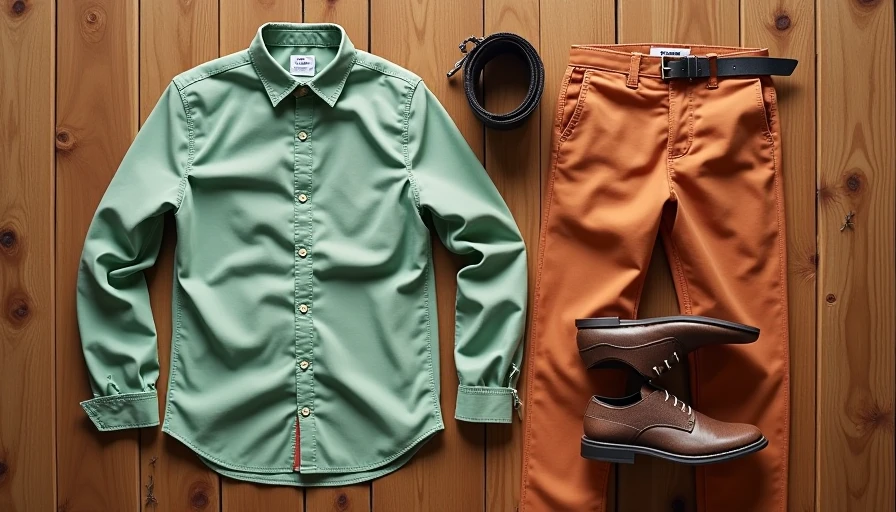
- **Mixing warm and cool tones.** If you’re wearing a warm olive jacket but cool gray pants, the combination can feel off. Stick to one temperature per outfit unless you’re confident. For beginners, keeping everything warm or everything cool is safer.
- **Clashing brights.** Two bright colors (like red and orange) worn together without a neutral buffer usually looks chaotic. If you want to wear a bright red hoodie, pair it with dark wash jeans or black chinos.
- **Overdoing black.** Black is a neutral, but head-to-toe black can feel harsh. Break it up with a gray layer or white sneakers. Also, black and navy together can look like a mistake unless you intentionally contrast textures.
- **Ignoring the shoe-color connection.** Your shoes should tie into the rest of your outfit. White sneakers work with almost anything, but brown boots should match the warmth of your belt or bag.
Avoiding these mistakes is part of learning how color coordination simplifies mens outfits for beginners. Once you know the pitfalls, you can skip them and move on to looking good.
Build a Capsule Wardrobe Around Neutrals
A capsule wardrobe is a small collection of interchangeable pieces. For a beginner, it’s the best investment you can make. Pick a neutral base — usually navy, charcoal, olive, and tan — and then add two or three accent colors you like (burgundy, mustard, light blue). Every piece in your closet should be mix-and-match friendly.
Here’s a sample capsule:
- 3 pairs of pants: dark wash jeans, khaki chinos, charcoal trousers
- 5 tops: white oxford, navy crewneck sweater, gray henley, olive field jacket, light blue button-down
- 2 pairs of shoes: white low-top sneakers, brown boots
- Accessories: a leather belt (brown), a watch with a neutral strap
With these pieces alone, you can create dozens of outfits without ever worrying about clashing colors. That’s the core of how color coordination simplifies mens outfits for beginners — by letting a limited, intentional set of colors do the heavy lifting.
Final Thoughts
The goal isn’t to become a color expert. It’s to make looking good easier so you can focus on the rest of your life. Start with a simple palette, follow the 80/20 rule, and avoid the common mistakes. Before you know it, you’ll be getting dressed in under two minutes and feeling confident in what you’re wearing.
If you’re just starting out, don’t overthink it. Pick three neutrals and one accent color. Wear them in different combinations. That’s all you need. How color coordination simplifies mens outfits for beginners is really about reducing decisions — and that clarity is what makes you look good.




Letters
No letters yet — be the first to write.